

Calibrator
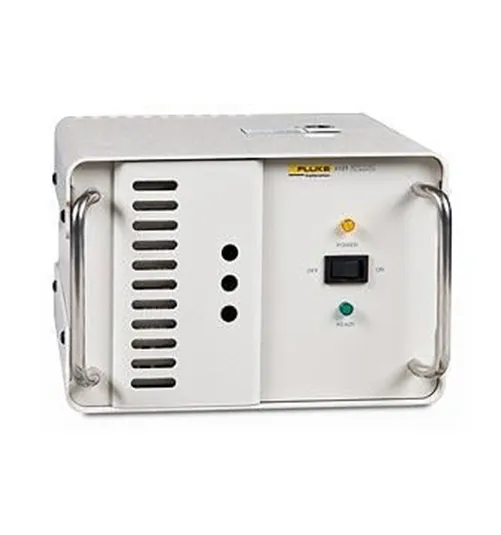
Fluke 9101 Zero-Point Dry-Well
Ice-point reference without the ice
• Bath-quality stability in a portable ice-point reference
• Easy re-calibration for long-term reliability
• Ready-light frees user’s time and attention
• Solid-state cooling technology
Have you been thinking about buying a zero-point dry-well? Forget those ugly-looking units the competition makes. You can get a great looking and great performing zero-point dry-well from Fluke Calibration.
The 9101 has three test wells for inserting more than one probe at a time. All three wells are stable to ±0.005 °C. One well accommodates changeable inserts for varying probe diameters.
• Bath-quality stability in a portable ice-point reference
• Easy re-calibration for long-term reliability
• Ready-light frees user’s time and attention
• Solid-state cooling technology
Have you been thinking about buying a zero-point dry-well? Forget those ugly-looking units the competition makes. You can get a great looking and great performing zero-point dry-well from Fluke Calibration.
The 9101 has three test wells for inserting more than one probe at a time. All three wells are stable to ±0.005 °C. One well accommodates changeable inserts for varying probe diameters.
Download
Produk Lainnya
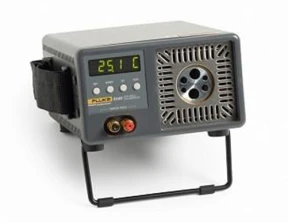
Great performance in portable instruments
• Lightweight and very portable
• Accuracy to ±0.25 °C
• RS-232 interface
• Easy to recalibrate
If you’ve been using a dry well calibrator or dry block calibrator for field work, you know there’s a lot more to them than temperature range and stability. Size, weight, speed, convenience, and software are also significant.
A field dry well needs to be portable, flexible, and suitable for high-volume calibrations or certifications. If it's not, you’ll soon forget about the great stuff the sales rep told you and realize what you’ve really bought.
At Fluke Calibration, we use dry well calibrators every day in our manufacturing and calibration work, and we know what makes a dry well easy and productive to use—which is exactly how users describe our series of field dry wells. These dry wells work for you instead of the other way around.
• Lightweight and very portable
• Accuracy to ±0.25 °C
• RS-232 interface
• Easy to recalibrate
If you’ve been using a dry well calibrator or dry block calibrator for field work, you know there’s a lot more to them than temperature range and stability. Size, weight, speed, convenience, and software are also significant.
A field dry well needs to be portable, flexible, and suitable for high-volume calibrations or certifications. If it's not, you’ll soon forget about the great stuff the sales rep told you and realize what you’ve really bought.
At Fluke Calibration, we use dry well calibrators every day in our manufacturing and calibration work, and we know what makes a dry well easy and productive to use—which is exactly how users describe our series of field dry wells. These dry wells work for you instead of the other way around.
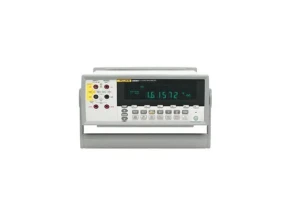
It is remarkably easy to use, even by unskilled operators, because it makes the measurements you perform most often extremely easy and fast to do.
Six setup buttons on the 8808A front panel operate like a car radio’s station presets. Simply set up the meter for a common measurement, then press shift followed by a setup button (S1 to S6) to save the setup. Now each time you perform that measurement, you simply press the appropriate setup key. It’s that easy!
The setup buttons eliminate the need to follow complex work instruction sheets. Operators no longer need to press multiple buttons to set up a measurement function and range, test limits, or enter other parameters to make a measurement.
Eliminate production mistakes
The Fluke 8808A 5.5 digit multimeter dependably performs the most common measurements required by today’s applications. Whether you are performing functional tests or making critical measurements on test points, using the limit compare mode with pass/fail indicators eliminates production mistakes, especially those where results are “on the edge.” The 8808A display has built-in enunciators that clearly show the operator whether a test passes or fails. The pass/fail indicators take the guesswork out of testing: the result is either within limits or it’s out!
Improve quality and efficiency in manufacturing test, R&D or service applications
Manufacturing test, R&D, development and service applications demand performance and flexibility from a bench meter. This Fluke 8808A makes measurements that stand up to any scrutiny. It delivers a wide variety of measurement functions, including volts, ohms, and amps, plus frequency—all at superior accuracy and resolution.
Measure two parameters at once
The 8808A features a unique dual display that allows you to measure two different parameters of the same signal from one test connection. Looking at dual interrelated parameters like voltage and current simultaneously can reveal conditions that might go unnoticed otherwise, greatly simplifying test and troubleshooting.
Measure sensitive leakage current
Typical multimeters use a shunt method to measure current, creating a measurement burden voltage that increases the error in low current measurements. This makes it difficult, if not impossible, to perform tasks such as determining the true leakage current on a battery-powered device while it is powered down, or measuring small currents in sensitive circuits. The Fluke 8808A is the only multimeter in its class to use a low-impedance operational amplifier and current-to-voltage conversion technique to eliminate the burden voltage and measure sensitive low currents. In this special mode, the 8808A can accurately measure small currents with a resolution of up to 100 nA.
Perform 4-wire measurements with only two leads
Patented split terminal jacks for the 2x4-wire ohms function allow you to perform 4-wire measurements using only two leads instead of four. Today’s surface mount components make it difficult to make connections. The task becomes even more difficult when you need to use a 4-wire technique for accurate low ohms measurements. The Fluke test lead accessory combines the four wires into two test lead pairs, making it easy for you to establish connections. You get excellent resolution and accuracy, plus the convenience and ease of using a single pair of leads.
Key features
Versatile, 5.5 digit bench multimeter for manufacturing, development and service applications
• 5.5 digit resolution
• Basic V DC accuracy of 0.015%
• Dual display
• Dedicated DC leakage current measurement
• 2 x 4 ohms 4-wire measurement technique
• Six dedicated buttons for fast access to instrument setups
• Hi/Lo limit compare for Pass/Fail testing
• Three-year warranty
Six setup buttons on the 8808A front panel operate like a car radio’s station presets. Simply set up the meter for a common measurement, then press shift followed by a setup button (S1 to S6) to save the setup. Now each time you perform that measurement, you simply press the appropriate setup key. It’s that easy!
The setup buttons eliminate the need to follow complex work instruction sheets. Operators no longer need to press multiple buttons to set up a measurement function and range, test limits, or enter other parameters to make a measurement.
Eliminate production mistakes
The Fluke 8808A 5.5 digit multimeter dependably performs the most common measurements required by today’s applications. Whether you are performing functional tests or making critical measurements on test points, using the limit compare mode with pass/fail indicators eliminates production mistakes, especially those where results are “on the edge.” The 8808A display has built-in enunciators that clearly show the operator whether a test passes or fails. The pass/fail indicators take the guesswork out of testing: the result is either within limits or it’s out!
Improve quality and efficiency in manufacturing test, R&D or service applications
Manufacturing test, R&D, development and service applications demand performance and flexibility from a bench meter. This Fluke 8808A makes measurements that stand up to any scrutiny. It delivers a wide variety of measurement functions, including volts, ohms, and amps, plus frequency—all at superior accuracy and resolution.
Measure two parameters at once
The 8808A features a unique dual display that allows you to measure two different parameters of the same signal from one test connection. Looking at dual interrelated parameters like voltage and current simultaneously can reveal conditions that might go unnoticed otherwise, greatly simplifying test and troubleshooting.
Measure sensitive leakage current
Typical multimeters use a shunt method to measure current, creating a measurement burden voltage that increases the error in low current measurements. This makes it difficult, if not impossible, to perform tasks such as determining the true leakage current on a battery-powered device while it is powered down, or measuring small currents in sensitive circuits. The Fluke 8808A is the only multimeter in its class to use a low-impedance operational amplifier and current-to-voltage conversion technique to eliminate the burden voltage and measure sensitive low currents. In this special mode, the 8808A can accurately measure small currents with a resolution of up to 100 nA.
Perform 4-wire measurements with only two leads
Patented split terminal jacks for the 2x4-wire ohms function allow you to perform 4-wire measurements using only two leads instead of four. Today’s surface mount components make it difficult to make connections. The task becomes even more difficult when you need to use a 4-wire technique for accurate low ohms measurements. The Fluke test lead accessory combines the four wires into two test lead pairs, making it easy for you to establish connections. You get excellent resolution and accuracy, plus the convenience and ease of using a single pair of leads.
Key features
Versatile, 5.5 digit bench multimeter for manufacturing, development and service applications
• 5.5 digit resolution
• Basic V DC accuracy of 0.015%
• Dual display
• Dedicated DC leakage current measurement
• 2 x 4 ohms 4-wire measurement technique
• Six dedicated buttons for fast access to instrument setups
• Hi/Lo limit compare for Pass/Fail testing
• Three-year warranty
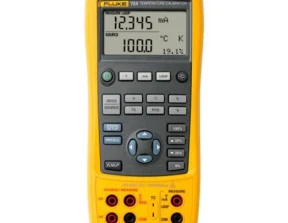
Key features
• Powerful, easy-to-use, high-accuracy temperature calibrator
• Test and calibrate temperature sensors and transmitters
• Measures 4 to 20 mA loops and can provide loop power
• Measures RTDs, thermocouples, ohms, and volts
• Source/simulates thermocouples, RTDs, volts, and ohms
• Powerful, easy-to-use, high-accuracy temperature calibrator
• Test and calibrate temperature sensors and transmitters
• Measures 4 to 20 mA loops and can provide loop power
• Measures RTDs, thermocouples, ohms, and volts
• Source/simulates thermocouples, RTDs, volts, and ohms
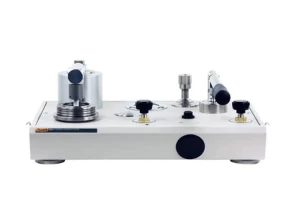
This versatile instrument provides calibrations from 1-30 inHg vacuum (0.03-1 bar) and 3-500 psi (0.2-35 bar) in one extremely accurate yet easy to use primary standard. A selector valve converts the unit from pressure to vacuum mode without the need to exchange pistons. Units are manufactured to the highest standards with certified accuracies traceable to International Standards Laboratories such as the National Institute of Standards and Technology (NIST). These piston/cylinder type pneumatic standards provide excellent stability, repeatability and accuracy. An optional built-in hand pump can be added for both pressure and vacuum generation.
Key features
• 0.015% of reading accuracy standard (0.008% optional)
• 1-30 inHg vacuum (0.03-1 bar vacuum)
• 3-500 psi (0.2-35 bar) pressure
• inH2O and mbar ranges available
• Series 3 non-magnetic stainless steel weights
• Units can be trimmed to local gravity FOC
Key features
• 0.015% of reading accuracy standard (0.008% optional)
• 1-30 inHg vacuum (0.03-1 bar vacuum)
• 3-500 psi (0.2-35 bar) pressure
• inH2O and mbar ranges available
• Series 3 non-magnetic stainless steel weights
• Units can be trimmed to local gravity FOC